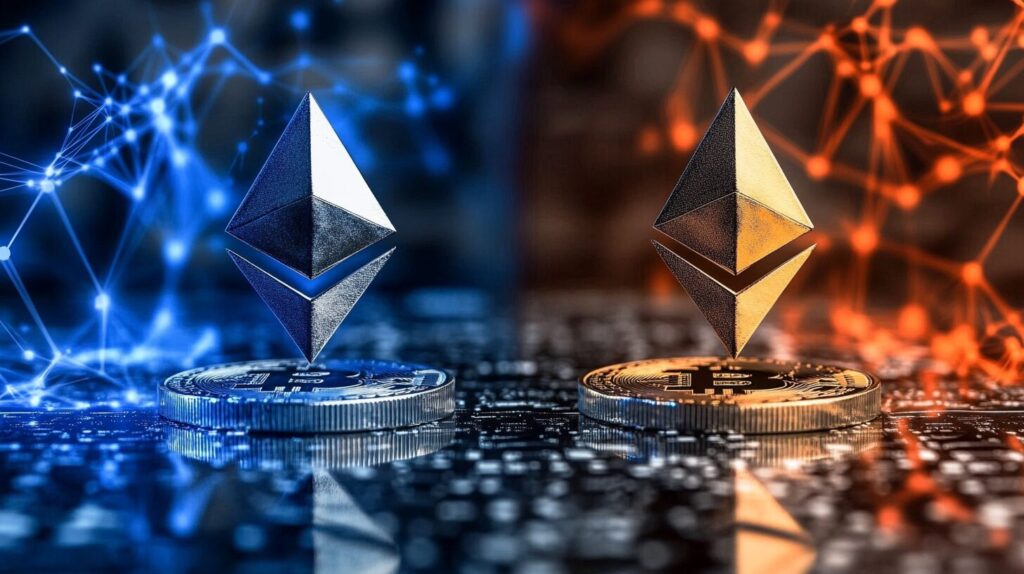
In the world of digital finance, where innovation meets technology, one term frequently surfaces Ethereum. It’s a concept that has redefined how individuals perceive and interact with blockchain technology and cryptocurrencies. Imagine a platform that not only supports a digital currency but also empowers developers to create decentralized applications (dApps) that operate without central control. This isn’t just a futuristic dream; it’s the reality of Ethereum. As we delve deeper, we’ll explore how Ethereum extends beyond the mere confines of cryptocurrency, revolutionizing industries by leveraging the power of decentralized networks.
Historically, financial systems have been centralized and controlled by governments or large institutions. But the rise of blockchain technology, beginning with Bitcoin, paved the way for a new era. Ethereum, introduced by a visionary young developer, Vitalik Buterin, took this concept further. It introduced a platform that could host and execute smart contracts—self-executing contracts where the terms are directly written into lines of code. Today, Ethereum stands as a cornerstone of the decentralized finance (DeFi) movement, and understanding its role requires a dive into its unique components, especially Ether (ETH), its native cryptocurrency.
At Argoox, we recognize the immense potential of Ethereum and the opportunities it offers for the future of finance. As we delve deeper, you’ll explore how Ethereum is reshaping the financial landscape and why understanding its components, like Ether, is crucial for anyone who is interested in the world of cryptocurrencies.
What is Blockchain?
Blockchain, at its main core, is a distributed ledger technology that can record transactions across many computers so that the registered transactions cannot be altered retroactively. This decentralized nature of blockchain ensures transparency and security, making it the backbone of all cryptocurrencies. It’s not like traditional databases that are managed by a central authority, and blockchains are maintained by a network of computers which, known as nodes, that collectively validate and record every transaction. This innovation has transformed not only the financial sector but also various industries, including supply chain management, healthcare, and real estate.
The Role of Decentralized Networks
Decentralized networks, as the name suggests, operate without a central governing body. Instead, they rely on a consensus mechanism to validate transactions and preserve the innocence of the network. This decentralization is crucial for eliminating single points of failure, decreasing the risk of fraud, and promoting transparency. In the context of cryptocurrencies, decentralized networks are what enable peer-to-peer transactions without the need for intermediaries like banks or payment processors.
Ethereum is one of the most prominent examples of a decentralized network. It’s not like Bitcoin, which is primarily a digital currency, Ethereum’s blockchain serves as a platform for building decentralized applications (dApps). These dApps run on a global network of nodes, ensuring that they remain operational as long as the Ethereum network exists.
What is Ethereum?
Ethereum is known as an open-source blockchain platform. It enables developers to build and then deploy decentralized applications. Created by Vitalik Buterin and launched in 2015, Ethereum extends the capabilities of blockchain beyond simple financial transactions. ETH introduced the concept of smart contracts to the crypto world, where it self-executing contracts with specific terms of the agreement that are directly written into code. These smart contracts allow developers to create a wide range of services and apps, such as financial services and gaming, all operating on the Ethereum blockchain.
How Ethereum is More Than Just a Cryptocurrency?
While Bitcoin is often known as “digital gold,” Ethereum is better described as a “decentralized supercomputer.” It offers a unique platform where developers can create applications that run precisely as they are programmed without any downtime, censorship, fraud, or third-party interference. This has led to the creation of a vast ecosystem of decentralized applications that leverage Ethereum’s capabilities. For example, decentralized finance (DeFi) platforms, which offer financial services without intermediaries, and non-fungible tokens, aka NFTs, which define ownership of unique digital assets, are all built on Ethereum.
The Origins of Ethereum
The idea of Ethereum was first proposed in late 2013 by Vitalik Buterin, a programmer and co-founder of Bitcoin Magazine. He envisioned a blockchain that could do more than just handle financial transactions. Buterin and a team of developers launched a crowdfunding campaign through an Initial Coin Offering (ICO) in 2014, which raised more than $18 million in Bitcoin, making it one of the most successful ICOs at the time. Ethereum’s mainnet officially launched on July 30, 2015, marking the beginning of a new era in blockchain technology.
What is Ether (ETH)?
Ether (ETH) is known as the native cryptocurrency of the Ethereum platform. It is mostly used for gas pay of transaction fees and computational services particularly on the Ethereum network. Unlike Bitcoin that just has a fixed supply of 21 million coins, Ether’s supply is not capped. This allows for continuous growth and adaptation as the Ethereum network expands.
The Role of Ether in the Ethereum Ecosystem
Ether plays an important role in the Ethereum ecosystem. It is the gas that incentivizes miners to validate transactions and secure the network. When a transaction or a smart contract is executed on the Ethereum network, a fee known as “gas” is paid in Ether. This gas fee compensates the miners for the computational resources they provide to maintain the network.
Ether’s Purpose and Use Cases
Ether serves multiple purposes within the Ethereum network. It is used as a medium of exchange, similar to Bitcoin, but its utility extends far beyond simple transactions. Some of its key use cases include:
- Transaction Fees: Every operation on the Ethereum network, whether it’s a simple transfer of ETH or the conduction of a smart contract, requires a gas fee paid in Ether.
- Staking: With the transition to Ethereum 2.0, Ether holders are able to stake their coins to help secure the network and earn rewards.
- Collateral: Ether is often used as collateral in decentralized finance (DeFi) applications to generate other cryptocurrencies or stablecoins.
- Investment: Many view Ether as a long-term investment, especially as Ethereum continues to grow and evolve.
Key Differences Between Ether (ETH) and Ethereum
It’s important to distinguish between Ethereum and Ether. Ethereum refers to the blockchain platform that supports smart contracts and dApps, while Ether (ETH) is the cryptocurrency that powers the platform. Ethereum provides the infrastructure, and Ether is the fuel that drives it. This distinction is crucial for understanding the broader ecosystem and the various roles that Ether plays within it.
How Ether Powers the Ethereum Network?
Ether is essential for the functioning of the Ethereum network. Every transaction, smart contract execution, and dApp interaction requires a gas fee paid in Ether. This fee is necessary to compensate the miners who validate and record the transactions on the blockchain. Without Ether, the Ethereum network would not be able to function, as there would be no incentive for miners to participate.
Examples of How Ether is Used Within Ethereum Applications (Smart Contracts, dApps)
Ether is used extensively in the execution of smart contracts and the process of decentralized applications (dApps) on the Ethereum platform. Here are a few examples:
- Decentralized Finance (DeFi): In platforms like Uniswap or Aave, users can lend, borrow, or trade cryptocurrencies without relying on traditional financial institutions. Ether is often used as collateral or as a medium of exchange.
- Non-Fungible Tokens (NFTs): Ether is commonly used to buy, sell, and trade NFTs on platforms like OpenSea.
- Gaming: Blockchain-based games like Axie Infinity use Ether for in-game transactions, allowing players to buy, sell, and trade digital assets.
Common Misconceptions
Despite its popularity, there are several misconceptions about Ethereum and Ether. One common misconception is that Ether and Ethereum are the same when, in fact, Ether is the cryptocurrency and Ethereum is the platform. Another misconception is that Ethereum is just a cryptocurrency like Bitcoin, whereas it is actually a comprehensive platform for decentralized applications.
The Role of Ether in Ethereum’s Future
As Ethereum continues to evolve, Ether will play an increasingly important role. The transition to Ethereum 2.0, which involves moving from a proof-of-work (PoW) to a proof-of-stake (PoS) consensus mechanism, will further enhance Ether’s utility. In the PoS model, Ether holders are able to stake their coins to help secure the network and earn rewards, thus providing a more energy-efficient and scalable solution for the Ethereum network.
What is Ethereum 2.0 and Its Impact on Ether?
Ethereum 2.0, aka Eth2 or Serenity, is an upgrade to the Ethereum network that aims to improve its sustainability, scalability, and security. One of the most considerable changes in Ethereum 2.0 is the shift from proof-of-work (PoW) to proof-of-stake (PoS). In this new model, Ether holders will be able to stake their coins, validate transactions, and secure the network, earning rewards in return. Moreover, this change is expected to reduce energy consumption by over 99% and increase the network’s capacity to handle more transactions per second.
Practical Examples and Case Studies
To understand the practical impact of Ether and Ethereum, consider the example of Uniswap, a decentralized exchange (DEX) built on Ethereum. Uniswap enables users to trade cryptocurrencies straight from their wallets without the need for an intermediary. Ether is used to pay for transaction fees and as a medium of exchange on the platform. Another example is MakerDAO, a decentralized lending platform where users can lock up Ether as collateral to generate DAI, which is a stablecoin that is pegged to the US dollar.
Conclusion
Ethereum and Ether represent the future of decentralized finance and blockchain technology. As we have explored, Ethereum is more than just a cryptocurrency; it is a powerful platform for building decentralized applications that have the potential to revolutionize industries. Ether, as the fuel that powers this platform, plays an important role in its operation and future development. In fact, as Ethereum transitions to Ethereum 2.0, the importance of Ether will only grow, making it a key asset in the world of cryptocurrency and beyond.
For those looking to explore the world of decentralized finance, Argoox offers advanced AI trading bots that can navigate the sophistication of the financial markets, including cryptocurrency. Visit the Argoox website today to learn more about how these innovative tools can help you make the most of your investments in this dynamic and ever-evolving market.